
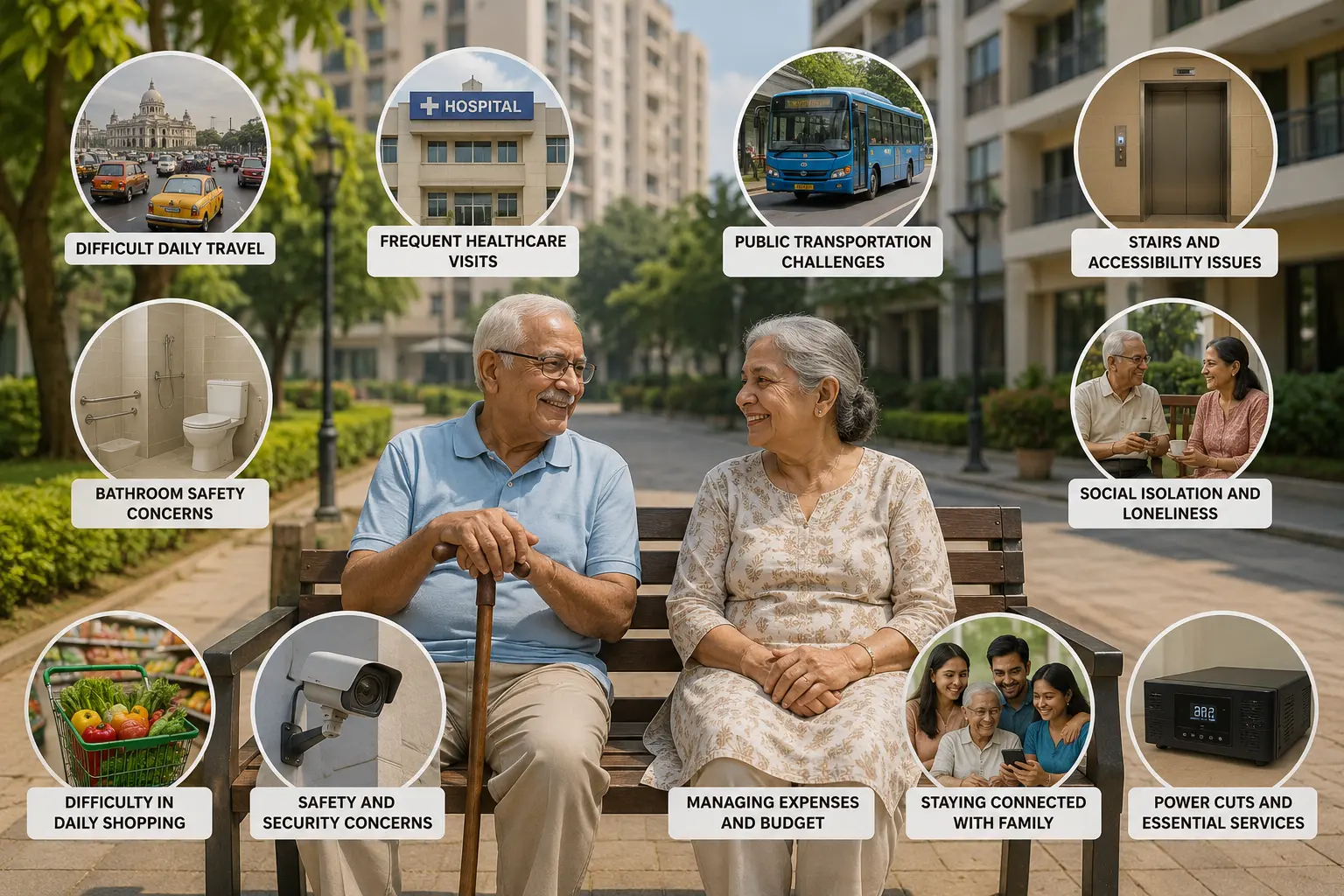
Moving to a new home is a major decision at any stage of life. For senior citizens, however, the decision often involves more than choosing a bigger apartment, a popular locality or a property with attractive features.
The real question is whether the new home will make everyday life easier.
For seniors and families considering a move, factors such as daily convenience, accessibility, healthcare, social connections, family visits and long-term comfort can all influence the decision.
For people searching for senior citizens moving to a new home in Kolkata, planning the move carefully can help avoid choosing a property that looks good today but does not support practical everyday living in the future.
This guide explores the common concerns seniors may face when moving to a new home and the important factors to consider before making a decision.
Problem 1: Moving Means Leaving a Familiar Environment
One of the biggest challenges of moving later in life is leaving behind a familiar routine.
A senior citizen may have lived in the same neighbourhood for many years. They may know the local market, nearby pharmacy, neighbours and surrounding streets.
Even when the current home has become inconvenient, moving can still feel emotionally difficult.
The Solution: Evaluate What Will Improve After the Move
Before deciding to move, identify the specific problems the new home is expected to solve.
For example:
- Is the current home difficult to maintain?
- Are stairs becoming inconvenient?
- Is healthcare access difficult?
- Are family members too far away?
- Is the neighbourhood no longer suitable for everyday needs?
- Is the existing property too large or difficult to manage?
A move should ideally solve practical problems rather than simply changing the address.
Problem 2: Choosing a Home Based Only on Appearance
A modern apartment may look attractive during a property visit.
However, appearance alone does not determine whether a home will be comfortable for everyday living.
A well-designed-looking property may still have inconvenient movement areas, difficult access or a location that does not support the senior’s lifestyle.
The Solution: Think About Everyday Activities
When visiting a property, imagine a normal day.
Consider:
- How easy is it to enter and leave the building?
- How comfortable is movement inside the apartment?
- Is the bedroom conveniently located?
- Is the bathroom practical to use?
- Is the kitchen manageable?
- Is the home easy to maintain?
The goal is to evaluate how the property will function in everyday life.
Problem 3: The New Location May Not Support Daily Convenience
A property can be located in a well-known area but still be inconvenient for the person living there.
After retirement, proximity to the workplace may no longer matter as much as access to everyday services.
The Solution: Evaluate the Neighbourhood Carefully
Before finalising a home, consider practical access to:
- Grocery stores
- Markets
- Pharmacies
- Banks
- ATMs
- Healthcare facilities
- Transportation
- Everyday services
For senior citizens living in Kolkata, daily convenience can play an important role in maintaining independence.
A suitable location should make routine activities manageable without unnecessary travel.
Problem 4: Healthcare Access May Be Considered Too Late
Healthcare is often discussed after other property decisions have already been made.
However, convenient access to doctors, clinics, pharmacies and hospitals can become an important part of long-term residential planning.
The Solution: Check Practical Healthcare Accessibility
Before choosing a new location, understand the accessibility of:
- Hospitals
- Clinics
- Doctors
- Diagnostic facilities
- Pharmacies
Do not rely only on general claims about a neighbourhood.
Consider how practical it will actually be to travel to these places when required.
Problem 5: Seniors May Lose Important Social Connections After Moving
Moving to another part of Kolkata may make it harder to meet long-time friends or stay connected with familiar neighbours.
A new home may solve practical problems but create social challenges if the senior citizen feels isolated from people they care about.
The Solution: Consider Social Connections Before Choosing the Location
Ask:
- How far away are close friends?
- Can family members visit conveniently?
- Does the new location support the preferred lifestyle?
- Will it be possible to maintain existing relationships?
A home should support not only physical comfort but also social connection.
Problem 6: The New Home May Require Too Much Maintenance
A common reason for moving after retirement is to reduce the effort required to manage a large property.
However, families should still evaluate how easy the new home will be to maintain.
The Solution: Choose a Manageable Living Space
Consider:
- The amount of space genuinely required
- Cleaning requirements
- Storage needs
- Overall layout
- Maintenance responsibilities
A smaller home is not automatically better.
The right home is one that provides sufficient comfort without creating unnecessary work.
Problem 7: Family Members May Choose the Home Without Understanding the Senior’s Preferences
Adult children may have good intentions when helping parents move.
However, a home selected primarily based on the children’s preferences may not suit the person who will actually live there.
Parents may care more about familiar surroundings, nearby friends or daily convenience.
The Solution: Make the Decision Together
Before shortlisting properties, discuss:
- Preferred neighbourhoods
- Daily routine
- Access to friends
- Family connectivity
- Healthcare needs
- Home size
- Lifestyle preferences
The senior citizen should remain actively involved throughout the decision-making process.
Problem 8: Accessibility Is Often Confused With Property Size
A large apartment does not automatically mean that it is easy to use.
Similarly, a smaller apartment may be highly practical if the layout supports comfortable movement.
The Solution: Evaluate Accessibility Throughout the Property
Look at three different areas.
Building Access
Consider:
- Entrance accessibility
- Pathways
- Lift availability where required
- Common areas
Apartment Layout
Check:
- Ease of movement
- Bedroom location
- Bathroom access
- Kitchen usability
- Placement of frequently used spaces
Long-Term Practicality
Ask whether the property is likely to remain comfortable as lifestyle requirements change.
Problem 9: Families May Focus on the Move but Not the Adjustment Period
Moving to a new home involves more than transporting furniture and belongings.
A senior citizen may need time to become familiar with a new neighbourhood, new routines and new surroundings.
The Solution: Plan the Transition Gradually
Where possible, families can help seniors become familiar with the new area.
Before or after moving, understand:
- Nearby essential services
- Transportation options
- Important routes
- Locations of frequently used facilities
- Ways to maintain family communication
The transition should allow time for adjustment.
Problem 10: The New Home May Solve Today’s Problems but Not Support Future Comfort
A property can feel suitable during the buying process but become less practical later.
This is why long-term planning is important.
The Solution: Look Beyond Immediate Requirements
Before finalising a property, ask:
- Will everyday movement remain practical?
- Is the home manageable?
- Does the location support essential services?
- Is healthcare reasonably accessible?
- Can family members visit conveniently?
- Does the property support the preferred lifestyle?
Planning for long-term comfort can help families make a more informed decision.
A Step-by-Step Approach to Moving to a New Home
Step 1: Identify Why You Want to Move
Start by identifying the actual problems with the current living arrangement.
Write down the challenges that the new home needs to solve.
Step 2: Define Daily Priorities
Consider the importance of:
- Healthcare
- Markets
- Pharmacies
- Family
- Friends
- Transportation
- Social activities
- Home maintenance
This will help create a clearer property checklist.
Step 3: Shortlist Suitable Locations
Instead of selecting a location based only on popularity, compare neighbourhoods based on the senior citizen’s daily routine.
Step 4: Visit the Property Carefully
Take time to walk through:
- The entrance
- Common areas
- The apartment
- Frequently used rooms
Think about how everyday activities will be managed.
Step 5: Compare Multiple Options
Avoid choosing the first property that appears suitable.
Compare shortlisted homes based on the same criteria.
Step 6: Consider Long-Term Comfort
The final decision should balance current preferences with future practicality.
What Should Seniors Check Before Moving to a New Home?
Before making a decision, use this practical checklist.
Home Comfort
- Is the layout practical?
- Is there comfortable space for everyday movement?
- Is the home easy to maintain?
- Are frequently used rooms convenient?
Building Accessibility
- Is the entrance easy to access?
- Is lift access available where required?
- Are common areas practical?
Daily Convenience
- Can groceries and medicines be managed easily?
- Are essential services accessible?
- Is transportation practical?
Healthcare
- Are doctors and healthcare facilities reasonably accessible?
Family and Social Connection
- Can family members visit conveniently?
- Can existing friendships be maintained?
- Does the new location support the desired lifestyle?
Long-Term Suitability
- Will the home remain practical in the future?
Moving to a New Home Without Losing Independence
One of the biggest concerns for seniors is the fear that moving may result in losing independence.
However, the right home can actually support greater independence.
A practical location can make essential services easier to access.
A manageable home can reduce unnecessary maintenance.
A convenient building can make everyday movement simpler.
For families considering independent living for senior citizens in Kolkata, the objective should be to choose an environment that supports freedom while making practical assistance available when needed.
Choosing a Home Based on Lifestyle
There is no single type of home that is right for every senior citizen.
Some people may prefer to remain close to familiar surroundings.
Others may want to move closer to family.
Some may prioritise a quieter environment, while others may want convenient access to markets and social activity.
The right choice depends on the individual.
A useful way to evaluate a new home is:
Home + Accessibility + Daily Convenience + Healthcare + Social Connection + Family Connectivity + Long-Term Comfort
When these factors work together, the move is more likely to support a comfortable lifestyle.
Exploring Residential Options in Kolkata
When comparing different homes, look beyond property photographs and promotional features.
Focus on how the apartment, building and neighbourhood work together.
You can explore residential properties in Kolkata and compare options based on practical lifestyle requirements, accessibility and long-term comfort.
It may also be helpful to learn more about choosing a suitable location in Kolkata before shortlisting properties.
Final Thoughts
Moving to a new home after retirement can be a positive step when the decision is based on actual lifestyle needs.
The best home is not necessarily the biggest or located in the most popular area.
It is the one that supports everyday comfort, independence and connection to the people and places that matter.
For senior citizens moving to a new home in Kolkata, taking time to evaluate accessibility, healthcare, daily convenience, family connectivity and long-term usability can help make the decision more practical.
The right move should make life easier, not more complicated.
Frequently Asked Questions
What should seniors consider before moving to a new home?
Seniors should consider accessibility, daily convenience, healthcare access, transportation, home maintenance, social connections and long-term comfort.
Should senior citizens move to a smaller home?
Not always. The ideal home size depends on individual needs. A manageable and practical layout may be more important than the total size of the property.
Is location important when choosing a home for senior citizens?
Yes. Location can influence access to healthcare, pharmacies, markets, transportation, family and social connections.
How can families help elderly parents move to a new home?
Families can help identify priorities, compare properties, evaluate practical factors and support the transition while ensuring parents remain involved in the decision.
What makes a home suitable for independent senior living?
A practical layout, accessible building, convenient location and manageable everyday environment can help support independent living.
Should senior citizens move closer to their children?
This depends on personal preferences and family circumstances. However, convenient family connectivity can make regular visits and practical support easier.